
Exploring the significance of scheduled maintenance in preventing major repairs, this introduction sets the stage for a comprehensive discussion on the topic. Through a blend of informative insights and real-world examples, readers are invited to delve into the world of proactive vehicle care.
The subsequent paragraph provides a detailed account of the key components of scheduled maintenance and their role in ensuring the longevity of vehicles.
Importance of Scheduled Maintenance
Regular maintenance is essential for preventing major repairs in vehicles. By following a scheduled maintenance plan, car owners can detect and address minor issues before they escalate into costly problems. Neglecting maintenance can lead to serious damage to the engine, transmission, brakes, and other vital components, resulting in expensive repairs that could have been avoided with timely maintenance.
Example of Neglecting Maintenance
Without regular oil changes, the engine can suffer from wear and tear, leading to decreased performance and potential engine failure. Ignoring brake inspections and replacements can result in brake system failure, putting the driver and passengers at risk of accidents.
Neglecting tire rotations and alignments can cause uneven tire wear, affecting the vehicle's handling and stability on the road.
Impact of Regular Maintenance on Longevity
Regular maintenance not only helps prevent major repairs but also extends the longevity of a vehicle. By keeping all components properly maintained and functioning optimally, the vehicle can perform efficiently and reliably for a longer period. This ensures that the car remains safe to drive and retains its value over time.
Additionally, a well-maintained vehicle is more fuel-efficient, saving the owner money on gas expenses in the long run.
Components of Scheduled Maintenance
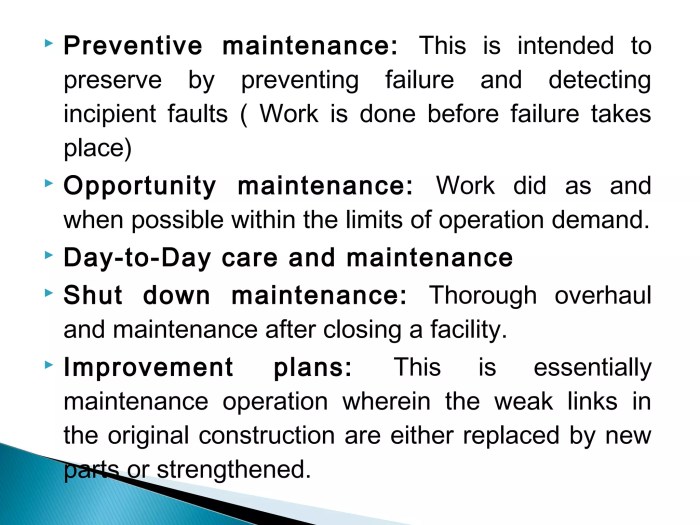
Regular maintenance is crucial for keeping your vehicle running smoothly and preventing major repairs down the line. A well-planned maintenance schedule should include checking key components to ensure optimal performance and longevity of your vehicle.
Checking Fluids
Regularly checking and changing fluids such as engine oil, transmission fluid, brake fluid, and coolant is essential to keep your vehicle running smoothly. Proper fluid levels and quality help lubricate, cool, and protect vital components of your vehicle's engine and transmission.
Inspecting Filters
Filters, including air filters, oil filters, and fuel filters, play a crucial role in preventing contaminants from entering your vehicle's engine and fuel system. Regularly inspecting and replacing filters as needed can improve engine performance and fuel efficiency.
Maintaining Brakes
Brakes are one of the most critical safety features of your vehicle. Regular inspection of brake pads, rotors, and brake fluid can help prevent brake failure and ensure your ability to stop safely when needed. Addressing brake issues early can also prevent more extensive and costly repairs.
Monitoring Tires
Proper tire maintenance, including checking tire pressure, tread depth, and alignment, is essential for safe driving and optimal fuel efficiency. Regular inspections can help identify issues such as uneven wear, underinflation, or misalignment, preventing premature tire wear and potential blowouts.
Early Detection of Issues
Regular inspections as part of scheduled maintenance can help in early detection of potential issues before they escalate into major problems. Identifying and addressing minor issues early on can save you time, money, and the inconvenience of unexpected breakdowns.
Frequency of Maintenance Tasks
Regular maintenance tasks are essential to keep your vehicle running smoothly and prevent major repairs. Here is a general overview of how often different maintenance tasks should be performed:
Oil Changes
Oil changes are typically recommended every 5,000 to 7,500 miles, depending on the type of oil used and the manufacturer's guidelines. However, newer vehicles may be able to go longer between oil changes due to advancements in oil technology.
Air Filter Replacements
Air filters should be replaced every 12,000 to 15,000 miles or as recommended by the manufacturer. However, if you frequently drive in dusty or polluted areas, you may need to replace the air filter more often to ensure optimal engine performance
Tire Rotations
Tire rotations are typically recommended every 5,000 to 7,500 miles to ensure even wear on all tires. This helps extend the life of your tires and improve overall handling and safety.
Driving conditions and mileage can greatly affect the frequency of maintenance tasks. For example, stop-and-go city driving may require more frequent oil changes compared to highway driving. Similarly, driving on rough roads or in extreme weather conditions can accelerate wear and tear on air filters and tires, necessitating more frequent replacements.
DIY Maintenance vs. Professional Services

When it comes to maintaining your vehicle, there are certain tasks that can be done by vehicle owners themselves, while others require the expertise of professional technicians. It's important to understand the distinction between the two to ensure the longevity and performance of your vehicle.
Tasks for Vehicle Owners
- Regularly checking and topping up fluids such as oil, coolant, and windshield washer fluid.
- Replacing windshield wipers and air filters.
- Inspecting tires for wear and proper inflation.
- Changing light bulbs and fuses.
Tasks Requiring Professional Assistance
- Complex engine repairs and diagnostics.
- Brake system repairs and replacements.
- Transmission repairs and fluid changes.
- Electrical system troubleshooting.
Regular inspections by certified technicians are crucial to catch any underlying issues before they escalate into major problems. Attempting complex maintenance tasks without the proper knowledge or tools can lead to costly mistakes and even pose safety risks. Certified technicians have the training, expertise, and specialized equipment to diagnose and address issues effectively, ensuring the overall health and safety of your vehicle.
Remember, prevention is always better than cure when it comes to maintaining your vehicle.
Wrap-Up
In conclusion, the discussion on preventing major repairs through scheduled maintenance underscores the importance of regular care and attention to detail. By following a structured maintenance schedule and staying proactive in addressing potential issues, vehicle owners can significantly reduce the likelihood of costly repairs in the long run.
FAQ Explained
How often should I check my vehicle's fluids?
It's recommended to check your vehicle's fluids, such as oil and coolant, at least once a month or as per your manufacturer's guidelines.
Can I perform tire rotations at home?
While it's possible to rotate tires at home with the right equipment, many prefer to have this done by professionals to ensure proper alignment and balance.
What are the dangers of neglecting scheduled maintenance?
Neglecting scheduled maintenance can lead to issues like engine overheating, brake failure, and premature wear on vital components, ultimately resulting in expensive repairs.
Is it necessary to replace air filters regularly?
Regular air filter replacements are essential to maintain air quality in the cabin and ensure optimal engine performance by preventing dirt and debris from entering the system.
data-ad-client="ca-pub-1784768207398293" data-ad-slot="7141627725" data-ad-format="auto" data-full-width-responsive="true">Exploring the significance of scheduled maintenance in preventing major repairs, this introduction sets the stage for a comprehensive discussion on the topic. Through a blend of informative insights and real-world examples, readers are invited to delve into the world of proactive vehicle care.
The subsequent paragraph provides a detailed account of the key components of scheduled maintenance and their role in ensuring the longevity of vehicles.
Importance of Scheduled Maintenance
Regular maintenance is essential for preventing major repairs in vehicles. By following a scheduled maintenance plan, car owners can detect and address minor issues before they escalate into costly problems. Neglecting maintenance can lead to serious damage to the engine, transmission, brakes, and other vital components, resulting in expensive repairs that could have been avoided with timely maintenance.
Example of Neglecting Maintenance
Without regular oil changes, the engine can suffer from wear and tear, leading to decreased performance and potential engine failure. Ignoring brake inspections and replacements can result in brake system failure, putting the driver and passengers at risk of accidents.
Neglecting tire rotations and alignments can cause uneven tire wear, affecting the vehicle's handling and stability on the road.
Impact of Regular Maintenance on Longevity
Regular maintenance not only helps prevent major repairs but also extends the longevity of a vehicle. By keeping all components properly maintained and functioning optimally, the vehicle can perform efficiently and reliably for a longer period. This ensures that the car remains safe to drive and retains its value over time.
Additionally, a well-maintained vehicle is more fuel-efficient, saving the owner money on gas expenses in the long run.
Components of Scheduled Maintenance
Regular maintenance is crucial for keeping your vehicle running smoothly and preventing major repairs down the line. A well-planned maintenance schedule should include checking key components to ensure optimal performance and longevity of your vehicle.
Checking Fluids
Regularly checking and changing fluids such as engine oil, transmission fluid, brake fluid, and coolant is essential to keep your vehicle running smoothly. Proper fluid levels and quality help lubricate, cool, and protect vital components of your vehicle's engine and transmission.
Inspecting Filters
Filters, including air filters, oil filters, and fuel filters, play a crucial role in preventing contaminants from entering your vehicle's engine and fuel system. Regularly inspecting and replacing filters as needed can improve engine performance and fuel efficiency.
Maintaining Brakes
Brakes are one of the most critical safety features of your vehicle. Regular inspection of brake pads, rotors, and brake fluid can help prevent brake failure and ensure your ability to stop safely when needed. Addressing brake issues early can also prevent more extensive and costly repairs.
Monitoring Tires
Proper tire maintenance, including checking tire pressure, tread depth, and alignment, is essential for safe driving and optimal fuel efficiency. Regular inspections can help identify issues such as uneven wear, underinflation, or misalignment, preventing premature tire wear and potential blowouts.
Early Detection of Issues
Regular inspections as part of scheduled maintenance can help in early detection of potential issues before they escalate into major problems. Identifying and addressing minor issues early on can save you time, money, and the inconvenience of unexpected breakdowns.
Frequency of Maintenance Tasks
Regular maintenance tasks are essential to keep your vehicle running smoothly and prevent major repairs. Here is a general overview of how often different maintenance tasks should be performed:
Oil Changes
Oil changes are typically recommended every 5,000 to 7,500 miles, depending on the type of oil used and the manufacturer's guidelines. However, newer vehicles may be able to go longer between oil changes due to advancements in oil technology.
Air Filter Replacements
Air filters should be replaced every 12,000 to 15,000 miles or as recommended by the manufacturer. However, if you frequently drive in dusty or polluted areas, you may need to replace the air filter more often to ensure optimal engine performance
Tire Rotations
Tire rotations are typically recommended every 5,000 to 7,500 miles to ensure even wear on all tires. This helps extend the life of your tires and improve overall handling and safety.
Driving conditions and mileage can greatly affect the frequency of maintenance tasks. For example, stop-and-go city driving may require more frequent oil changes compared to highway driving. Similarly, driving on rough roads or in extreme weather conditions can accelerate wear and tear on air filters and tires, necessitating more frequent replacements.
DIY Maintenance vs. Professional Services
When it comes to maintaining your vehicle, there are certain tasks that can be done by vehicle owners themselves, while others require the expertise of professional technicians. It's important to understand the distinction between the two to ensure the longevity and performance of your vehicle.
Tasks for Vehicle Owners
- Regularly checking and topping up fluids such as oil, coolant, and windshield washer fluid.
- Replacing windshield wipers and air filters.
- Inspecting tires for wear and proper inflation.
- Changing light bulbs and fuses.
Tasks Requiring Professional Assistance
- Complex engine repairs and diagnostics.
- Brake system repairs and replacements.
- Transmission repairs and fluid changes.
- Electrical system troubleshooting.
Regular inspections by certified technicians are crucial to catch any underlying issues before they escalate into major problems. Attempting complex maintenance tasks without the proper knowledge or tools can lead to costly mistakes and even pose safety risks. Certified technicians have the training, expertise, and specialized equipment to diagnose and address issues effectively, ensuring the overall health and safety of your vehicle.
Remember, prevention is always better than cure when it comes to maintaining your vehicle.
Wrap-Up
In conclusion, the discussion on preventing major repairs through scheduled maintenance underscores the importance of regular care and attention to detail. By following a structured maintenance schedule and staying proactive in addressing potential issues, vehicle owners can significantly reduce the likelihood of costly repairs in the long run.
FAQ Explained
How often should I check my vehicle's fluids?
It's recommended to check your vehicle's fluids, such as oil and coolant, at least once a month or as per your manufacturer's guidelines.
Can I perform tire rotations at home?
While it's possible to rotate tires at home with the right equipment, many prefer to have this done by professionals to ensure proper alignment and balance.
What are the dangers of neglecting scheduled maintenance?
Neglecting scheduled maintenance can lead to issues like engine overheating, brake failure, and premature wear on vital components, ultimately resulting in expensive repairs.
Is it necessary to replace air filters regularly?
Regular air filter replacements are essential to maintain air quality in the cabin and ensure optimal engine performance by preventing dirt and debris from entering the system.
data-ad-client="ca-pub-1784768207398293" data-ad-slot="7141627725" data-ad-format="auto" data-full-width-responsive="true">