
Starting off with How to Find Cheap Car Insurance Without Compromising Coverage, this introductory paragraph aims to draw in readers with valuable insights and information.
Providing a detailed overview of the topic to set the stage for the discussion ahead.
Researching Insurance Providers
When looking for cheap car insurance without compromising coverage, it's essential to research and compare different insurance providers to find the best option for your needs. Here are some key factors to consider and tips on using online tools to compare insurance quotes.
Factors to Consider When Comparing Insurance Companies
- Policy Coverage: Look at the types of coverage offered by each insurance provider and ensure it meets your needs.
- Cost: Compare premiums and deductibles to find a balance between affordability and coverage.
- Customer Service: Read reviews and ratings to gauge the customer service experience offered by each provider.
- Claims Process: Research how easy and efficient the claims process is with each insurance company.
- Discounts: Check for available discounts that can help lower your premium without compromising coverage.
Tips for Using Online Tools to Compare Insurance Quotes
- Use Comparison Websites: Utilize online tools and comparison websites to get quotes from multiple insurance providers at once.
- Provide Accurate Information: Make sure to input correct details about your vehicle and driving history to receive accurate quotes.
- Review Coverage Options: Compare the coverage options and additional features offered by each insurance provider to make an informed decision.
- Check for Discounts: Look for discounts that you may qualify for, such as safe driver discounts or bundling policies for extra savings.
- Read Reviews: Take the time to read reviews and testimonials from other customers to get a sense of the overall satisfaction with each insurance provider.
Understanding Coverage Needs
When it comes to finding cheap car insurance without compromising coverage, it is crucial to understand your individual coverage needs. Assessing your driving habits and the type of vehicle you own can help determine the level of coverage required to protect yourself adequately on the road.
Types of Coverage
- Liability Coverage: This type of coverage helps pay for damages and injuries you cause to others in an accident. It is typically required by law in most states to cover bodily injury and property damage.
- Collision Coverage: Collision coverage helps pay for repairs to your vehicle if you are involved in a collision with another vehicle or object.
- Comprehensive Coverage: This coverage protects your vehicle from damages not caused by a collision, such as theft, vandalism, or natural disasters.
Scenarios for Specific Coverage Types
- Scenario 1: If you live in an area prone to severe weather conditions like hurricanes or hailstorms, comprehensive coverage can help cover damages to your vehicle.
- Scenario 2: For individuals with a long commute or who frequently drive in heavy traffic, liability coverage is essential to protect against potential accidents with other vehicles.
- Scenario 3: If you have a new or expensive car, collision coverage can provide peace of mind knowing that repairs will be covered in the event of an accident.
Utilizing Discounts and Savings
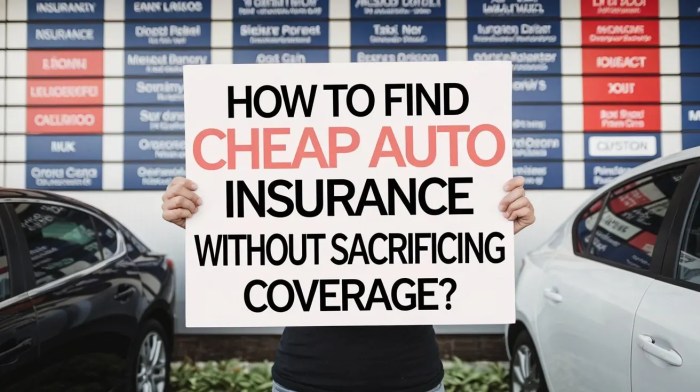
When it comes to finding cheap car insurance without compromising coverage, taking advantage of discounts and savings can significantly lower your premiums. Insurance companies offer various discounts to help reduce costs for policyholders. By understanding these discounts and how to qualify for them, you can maximize your savings and get the best possible rates.
Common Discounts Offered by Insurance Companies
- Good Driver Discount: This discount is typically offered to drivers with a clean driving record free of accidents or traffic violations.
- Multi-Policy Discount: When you bundle your car insurance with other policies, such as home or renters insurance, you can qualify for a multi-policy discount.
- Low Mileage Discount: If you drive fewer miles than the average driver, you may be eligible for a low mileage discount.
- Good Student Discount: Students with good grades can often receive a discount on their car insurance premiums.
- Safety Features Discount: Installing safety features in your vehicle, such as anti-theft devices or airbags, can help you qualify for a discount.
Maximizing Available Discounts
- Review Your Policy: Make sure to review your policy regularly to ensure you are taking advantage of all available discounts.
- Ask Your Provider: Don't be afraid to ask your insurance provider about any discounts you may qualify for. They may offer additional savings that you were not aware of.
- Consider Usage-Based Programs: Some insurance companies offer usage-based programs that track your driving habits. By demonstrating safe driving behavior, you can earn discounts on your premiums.
Negotiating with Insurance Providers for Better Rates
- Shop Around: Don't settle for the first quote you receive. Compare rates from multiple insurance providers to find the best deal.
- Bundle Your Policies: Bundling your car insurance with other policies can often lead to additional discounts and savings.
- Increase Your Deductible: By opting for a higher deductible, you can lower your premiums. Just be sure you can afford the out-of-pocket costs in case of an accident.
Adjusting Deductibles and Coverage Limits
Adjusting deductibles and coverage limits can have a significant impact on your car insurance premiums. By understanding how these factors affect your costs, you can make informed decisions to find the right balance between affordability and coverage.
Adjusting Deductibles
Adjusting your deductibles involves choosing the amount you agree to pay out of pocket before your insurance kicks in to cover a claim. A higher deductible typically leads to lower premiums, as you are assuming more financial responsibility in the event of an accident.
However, it's essential to ensure that you can afford the chosen deductible amount if you need to make a claim.
- Increasing your deductible can result in lower monthly premiums.
- Consider your financial situation and the likelihood of needing to make a claim when choosing a deductible.
- Compare the potential savings with a higher deductible against the increased out-of-pocket costs in the event of an accident.
Adjusting Coverage Limits
Coverage limits determine the maximum amount your insurance provider will pay for a covered claim. Choosing higher coverage limits provides more protection but can also increase your premiums. It's crucial to assess your coverage needs based on your vehicle, driving habits, and potential risks.
- Higher coverage limits offer greater protection but come with higher premiums.
- Evaluate your assets and potential liabilities to determine appropriate coverage limits.
- Consider factors like the value of your vehicle, your driving record, and the likelihood of accidents in your area.
Reviewing and Updating Policies Regularly
It is crucial to regularly review and update your insurance policies to ensure you have the appropriate coverage at the best possible price.
Importance of Annual Policy Reviews
Reviewing your insurance policies annually allows you to assess any changes in your circumstances and make necessary adjustments to your coverage. This ensures that you are adequately protected and not paying for coverage you no longer need.
Impact of Life Changes on Insurance Rates
Life changes such as moving to a new location, getting married, or adding a teen driver to your policy can significantly impact your insurance rates. It's essential to update your policy to reflect these changes accurately to avoid any gaps in coverage or unnecessary expenses.
Tips for Updating Policies Effectively
- Regularly review your coverage limits and deductibles to ensure they still meet your needs.
- Update your policy information whenever you experience a life event that could affect your rates.
- Shop around for quotes from different insurance providers to ensure you are getting the best deal.
- Consider bundling policies or taking advantage of discounts to save on premiums.
- Consult with your insurance agent to discuss any changes or updates that may benefit you.
Conclusion
Wrapping up the discussion on finding affordable car insurance without sacrificing coverage, this concluding paragraph summarizes key points and leaves readers with a lasting impression.
FAQs
What factors should I consider when comparing insurance companies?
When comparing insurance providers, consider their reputation, coverage options, customer service, and pricing. It's important to find a balance between affordability and quality coverage.
How can I qualify for common discounts offered by insurance companies?
To qualify for discounts, maintain a clean driving record, bundle multiple insurance policies, install safety features in your vehicle, and inquire about other available discounts with your provider.
Why is it important to review and update insurance policies regularly?
Regularly reviewing and updating policies ensures that your coverage aligns with your current needs and circumstances. Life changes such as moving or getting married can impact your insurance rates, so it's crucial to keep your policy up to date.
data-ad-client="ca-pub-1784768207398293" data-ad-slot="7141627725" data-ad-format="auto" data-full-width-responsive="true">Starting off with How to Find Cheap Car Insurance Without Compromising Coverage, this introductory paragraph aims to draw in readers with valuable insights and information.
Providing a detailed overview of the topic to set the stage for the discussion ahead.
Researching Insurance Providers
When looking for cheap car insurance without compromising coverage, it's essential to research and compare different insurance providers to find the best option for your needs. Here are some key factors to consider and tips on using online tools to compare insurance quotes.
Factors to Consider When Comparing Insurance Companies
- Policy Coverage: Look at the types of coverage offered by each insurance provider and ensure it meets your needs.
- Cost: Compare premiums and deductibles to find a balance between affordability and coverage.
- Customer Service: Read reviews and ratings to gauge the customer service experience offered by each provider.
- Claims Process: Research how easy and efficient the claims process is with each insurance company.
- Discounts: Check for available discounts that can help lower your premium without compromising coverage.
Tips for Using Online Tools to Compare Insurance Quotes
- Use Comparison Websites: Utilize online tools and comparison websites to get quotes from multiple insurance providers at once.
- Provide Accurate Information: Make sure to input correct details about your vehicle and driving history to receive accurate quotes.
- Review Coverage Options: Compare the coverage options and additional features offered by each insurance provider to make an informed decision.
- Check for Discounts: Look for discounts that you may qualify for, such as safe driver discounts or bundling policies for extra savings.
- Read Reviews: Take the time to read reviews and testimonials from other customers to get a sense of the overall satisfaction with each insurance provider.
Understanding Coverage Needs
When it comes to finding cheap car insurance without compromising coverage, it is crucial to understand your individual coverage needs. Assessing your driving habits and the type of vehicle you own can help determine the level of coverage required to protect yourself adequately on the road.
Types of Coverage
- Liability Coverage: This type of coverage helps pay for damages and injuries you cause to others in an accident. It is typically required by law in most states to cover bodily injury and property damage.
- Collision Coverage: Collision coverage helps pay for repairs to your vehicle if you are involved in a collision with another vehicle or object.
- Comprehensive Coverage: This coverage protects your vehicle from damages not caused by a collision, such as theft, vandalism, or natural disasters.
Scenarios for Specific Coverage Types
- Scenario 1: If you live in an area prone to severe weather conditions like hurricanes or hailstorms, comprehensive coverage can help cover damages to your vehicle.
- Scenario 2: For individuals with a long commute or who frequently drive in heavy traffic, liability coverage is essential to protect against potential accidents with other vehicles.
- Scenario 3: If you have a new or expensive car, collision coverage can provide peace of mind knowing that repairs will be covered in the event of an accident.
Utilizing Discounts and Savings
When it comes to finding cheap car insurance without compromising coverage, taking advantage of discounts and savings can significantly lower your premiums. Insurance companies offer various discounts to help reduce costs for policyholders. By understanding these discounts and how to qualify for them, you can maximize your savings and get the best possible rates.
Common Discounts Offered by Insurance Companies
- Good Driver Discount: This discount is typically offered to drivers with a clean driving record free of accidents or traffic violations.
- Multi-Policy Discount: When you bundle your car insurance with other policies, such as home or renters insurance, you can qualify for a multi-policy discount.
- Low Mileage Discount: If you drive fewer miles than the average driver, you may be eligible for a low mileage discount.
- Good Student Discount: Students with good grades can often receive a discount on their car insurance premiums.
- Safety Features Discount: Installing safety features in your vehicle, such as anti-theft devices or airbags, can help you qualify for a discount.
Maximizing Available Discounts
- Review Your Policy: Make sure to review your policy regularly to ensure you are taking advantage of all available discounts.
- Ask Your Provider: Don't be afraid to ask your insurance provider about any discounts you may qualify for. They may offer additional savings that you were not aware of.
- Consider Usage-Based Programs: Some insurance companies offer usage-based programs that track your driving habits. By demonstrating safe driving behavior, you can earn discounts on your premiums.
Negotiating with Insurance Providers for Better Rates
- Shop Around: Don't settle for the first quote you receive. Compare rates from multiple insurance providers to find the best deal.
- Bundle Your Policies: Bundling your car insurance with other policies can often lead to additional discounts and savings.
- Increase Your Deductible: By opting for a higher deductible, you can lower your premiums. Just be sure you can afford the out-of-pocket costs in case of an accident.
Adjusting Deductibles and Coverage Limits
Adjusting deductibles and coverage limits can have a significant impact on your car insurance premiums. By understanding how these factors affect your costs, you can make informed decisions to find the right balance between affordability and coverage.
Adjusting Deductibles
Adjusting your deductibles involves choosing the amount you agree to pay out of pocket before your insurance kicks in to cover a claim. A higher deductible typically leads to lower premiums, as you are assuming more financial responsibility in the event of an accident.
However, it's essential to ensure that you can afford the chosen deductible amount if you need to make a claim.
- Increasing your deductible can result in lower monthly premiums.
- Consider your financial situation and the likelihood of needing to make a claim when choosing a deductible.
- Compare the potential savings with a higher deductible against the increased out-of-pocket costs in the event of an accident.
Adjusting Coverage Limits
Coverage limits determine the maximum amount your insurance provider will pay for a covered claim. Choosing higher coverage limits provides more protection but can also increase your premiums. It's crucial to assess your coverage needs based on your vehicle, driving habits, and potential risks.
- Higher coverage limits offer greater protection but come with higher premiums.
- Evaluate your assets and potential liabilities to determine appropriate coverage limits.
- Consider factors like the value of your vehicle, your driving record, and the likelihood of accidents in your area.
Reviewing and Updating Policies Regularly
It is crucial to regularly review and update your insurance policies to ensure you have the appropriate coverage at the best possible price.
Importance of Annual Policy Reviews
Reviewing your insurance policies annually allows you to assess any changes in your circumstances and make necessary adjustments to your coverage. This ensures that you are adequately protected and not paying for coverage you no longer need.
Impact of Life Changes on Insurance Rates
Life changes such as moving to a new location, getting married, or adding a teen driver to your policy can significantly impact your insurance rates. It's essential to update your policy to reflect these changes accurately to avoid any gaps in coverage or unnecessary expenses.
Tips for Updating Policies Effectively
- Regularly review your coverage limits and deductibles to ensure they still meet your needs.
- Update your policy information whenever you experience a life event that could affect your rates.
- Shop around for quotes from different insurance providers to ensure you are getting the best deal.
- Consider bundling policies or taking advantage of discounts to save on premiums.
- Consult with your insurance agent to discuss any changes or updates that may benefit you.
Conclusion
Wrapping up the discussion on finding affordable car insurance without sacrificing coverage, this concluding paragraph summarizes key points and leaves readers with a lasting impression.
FAQs
What factors should I consider when comparing insurance companies?
When comparing insurance providers, consider their reputation, coverage options, customer service, and pricing. It's important to find a balance between affordability and quality coverage.
How can I qualify for common discounts offered by insurance companies?
To qualify for discounts, maintain a clean driving record, bundle multiple insurance policies, install safety features in your vehicle, and inquire about other available discounts with your provider.
Why is it important to review and update insurance policies regularly?
Regularly reviewing and updating policies ensures that your coverage aligns with your current needs and circumstances. Life changes such as moving or getting married can impact your insurance rates, so it's crucial to keep your policy up to date.
data-ad-client="ca-pub-1784768207398293" data-ad-slot="7141627725" data-ad-format="auto" data-full-width-responsive="true">